
French Eras and Periods
French boxes of the late eighteenth and nineteenth centuries are often described using the political and stylistic periods during which they were made. Unlike Britain, where the period from 1780 to 1900 was dominated by a relatively continuous monarchy, France experienced repeated changes of regime, from the final years of Louis XVI through the Revolution, two Empires, restored monarchy and successive Republics.
These changes provide a useful chronological framework, although styles and methods of box making rarely changed abruptly with a new ruler or regime. Materials, forms and decorative techniques frequently continued from one period into the next.
Louis XVI Period (1774 – 1792)
Louis XVI became King of France in 1774 and reigned until the abolition of the monarchy during the French Revolution in 1792.
Neoclassical taste influenced the restrained and symmetrical appearance of many boxes and fitted cases during the period. Mahogany and decorative veneers were used alongside marquetry, contrasting inlays and finely worked metal fittings.
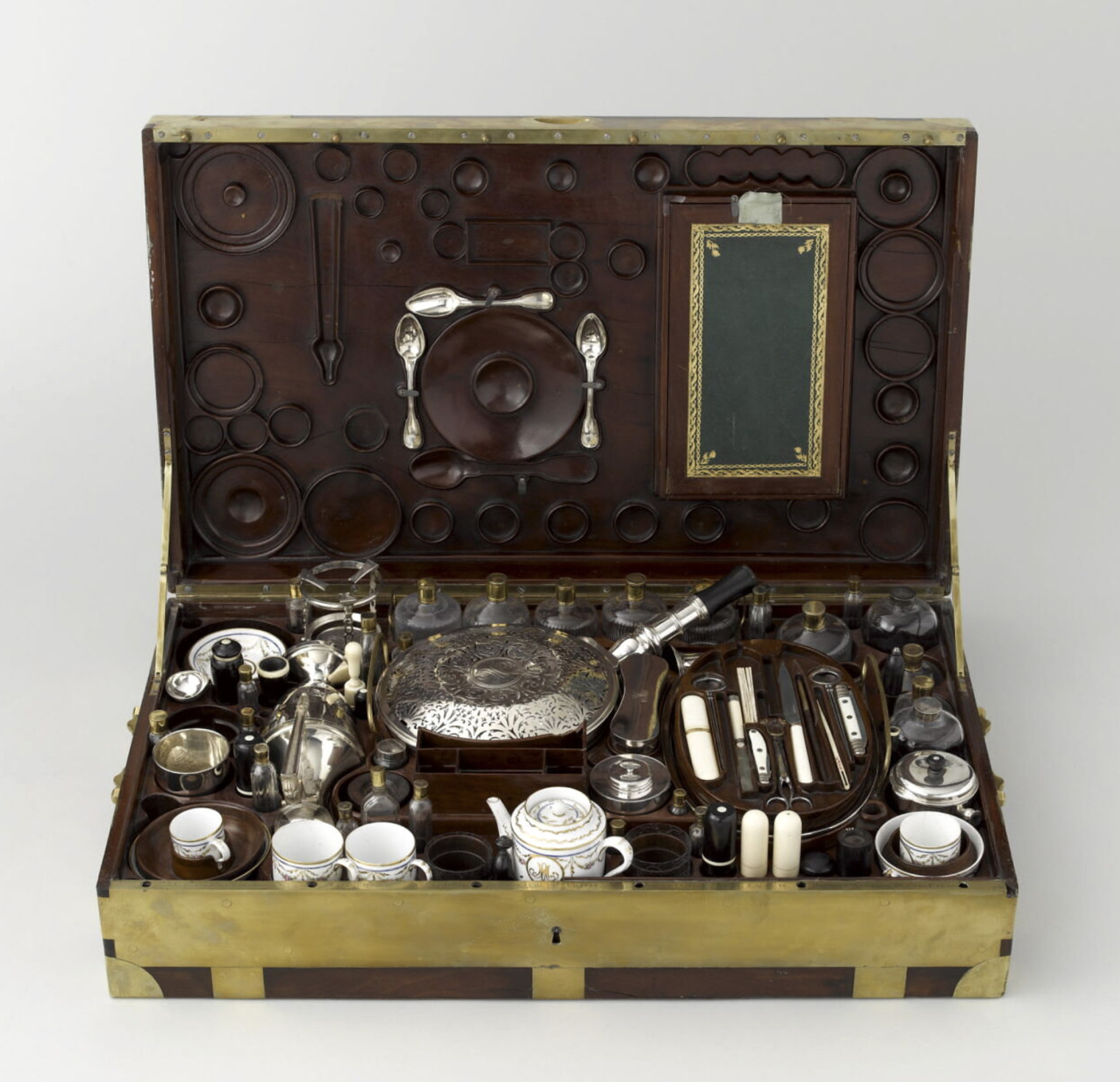
Particularly important was the development of elaborate nécessaires and travelling cases, in which finely made wooden cases contained carefully arranged toilet, writing, dining and personal implements. Surviving examples associated with Marie Antoinette demonstrate the remarkable sophistication achieved in fitted French cases during the final years of the ancien régime.
Revolutionary and Directoire Period (1789 – 1799)
The French Revolution began in 1789 and brought the monarchy to an end in 1792. Following several years of political upheaval, France was governed by the Directoire from 1795 until 1799.
The Revolutionary years did not produce an entirely distinct form of box making. Boxes and small fitted cases could retain the restrained forms, mahogany, decorative veneers and contrasting details established during the later eighteenth century.
The simpler Neoclassical character associated with the Directoire provided a transition between the Louis XVI period and the stronger forms that developed during the Consulat and First Empire.
Consulat Period (1799 – 1804)
Napoléon Bonaparte became First Consul of France in 1799 following the overthrow of the Directoire. He remained First Consul until 1804, when he became Emperor of the French.
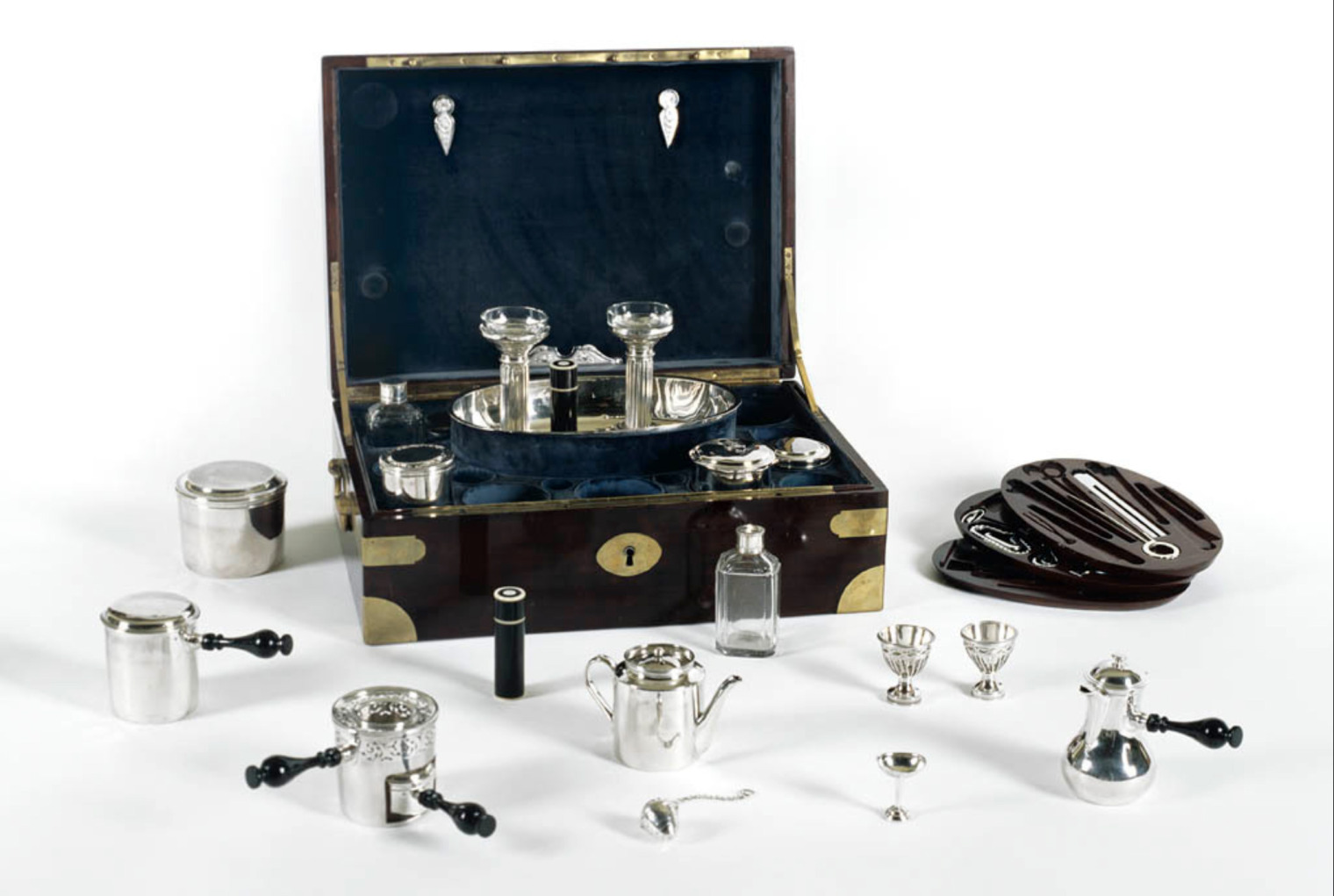
Mahogany became particularly important in high-quality travelling cases and nécessaires. Boxes could be made from substantial sections of timber hollowed to accommodate carefully fitted interiors containing silver, glass and personal implements.
Pierre-Dominique Maire's travelling nécessaire of 1802–1805, now in the Louvre, provides an important surviving example of this type of mahogany construction and illustrates the developing tradition of sophisticated French travelling cases around the beginning of the nineteenth century.
First Empire (1804 – 1815)
Napoléon Bonaparte became Emperor Napoléon I in 1804. His first reign ended in 1814, although he briefly returned to power during the Hundred Days in 1815 before his final defeat at Waterloo.
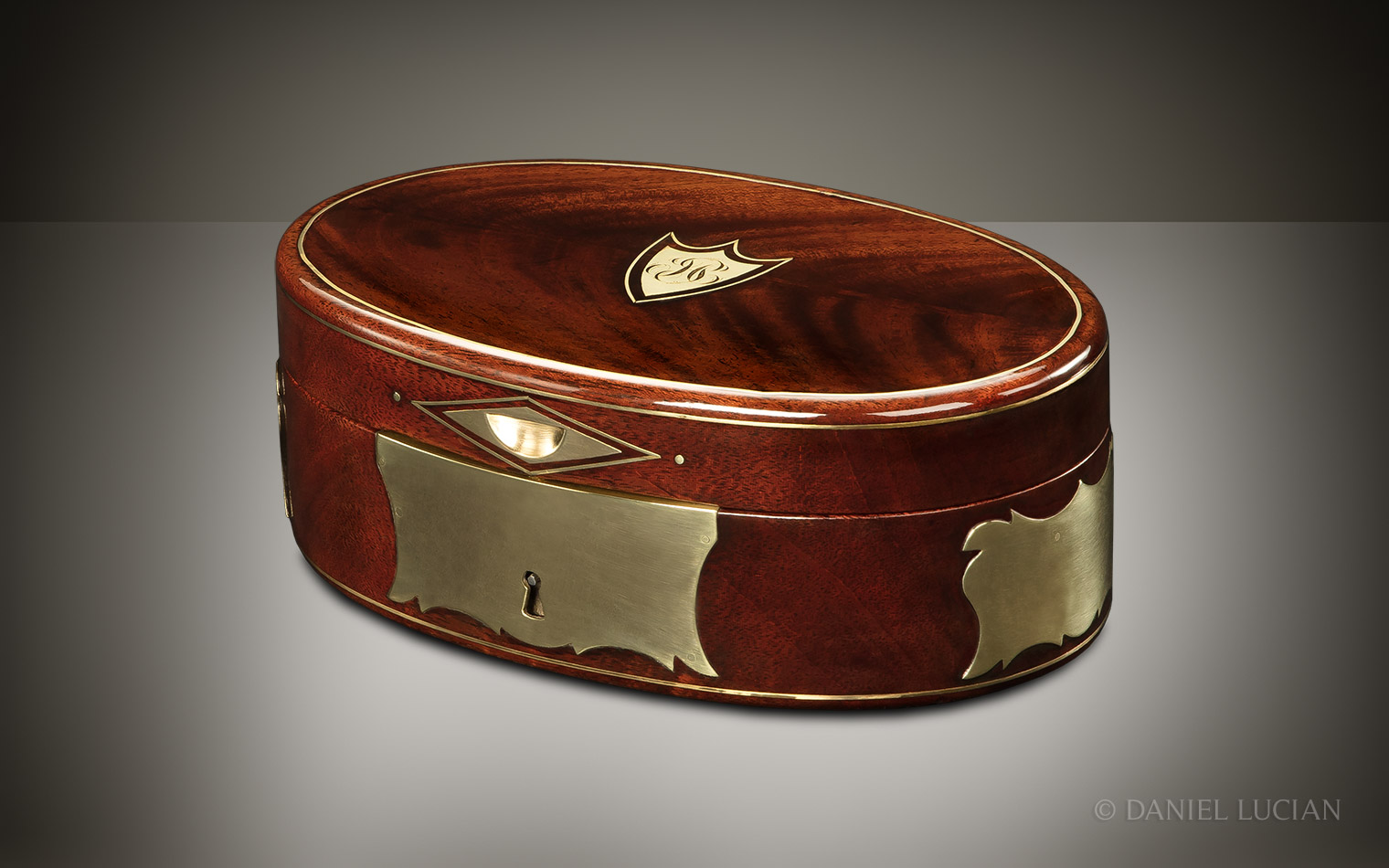
Mahogany was one of the characteristic materials of high-quality French travelling boxes during the period. On boxes, decoration was often considerably more restrained than on larger decorative objects, with polished mahogany surfaces complemented by brass stringing, edging, lock plates, escutcheons and recessed handles.
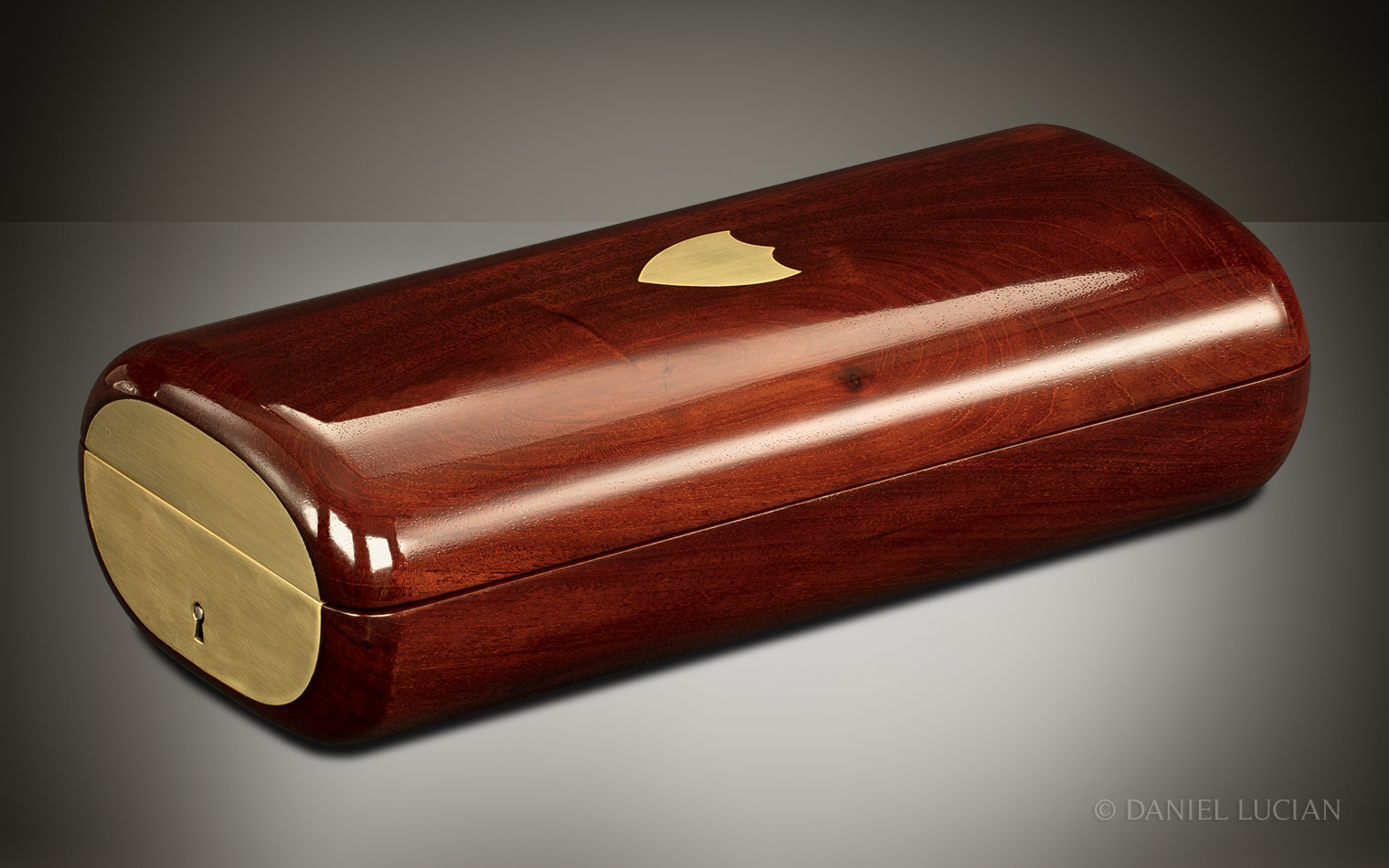
French travelling boxes of the early nineteenth century were produced in a number of distinctive compact forms, including small rectangular, cylindrical and elliptic or curved cases. Many examples of these types are associated with officers and other travellers and are described as coffrets d'officier, coffrets de marine or nécessaires de voyage. Their compact construction enabled personal, writing, toilet and sometimes dining implements to be carried securely while travelling or on campaign.
Some were constructed from substantial sections of solid mahogany hollowed to form the body of the box, producing particularly strong and compact cases.
These forms should not be regarded as confined strictly to the Empire period. Curved, elliptic and compact rectangular mahogany travelling cases continued to be produced during the years following Napoléon's fall, and examples of this general type can reasonably date from around 1810 through to the 1820s.
The period was particularly important in the development of the French nécessaire de voyage. Makers such as Martin-Guillaume Biennais produced exceptionally elaborate travelling cases containing silver, silver-gilt, glass and personal implements for Napoléon, the Imperial family and other wealthy patrons.
Restoration / Louis XVIII Period (1815 – 1824)
Following the final defeat of Napoléon in 1815, the Bourbon monarchy was restored under Louis XVIII, younger brother of Louis XVI. Louis XVIII remained King of France until his death in 1824.
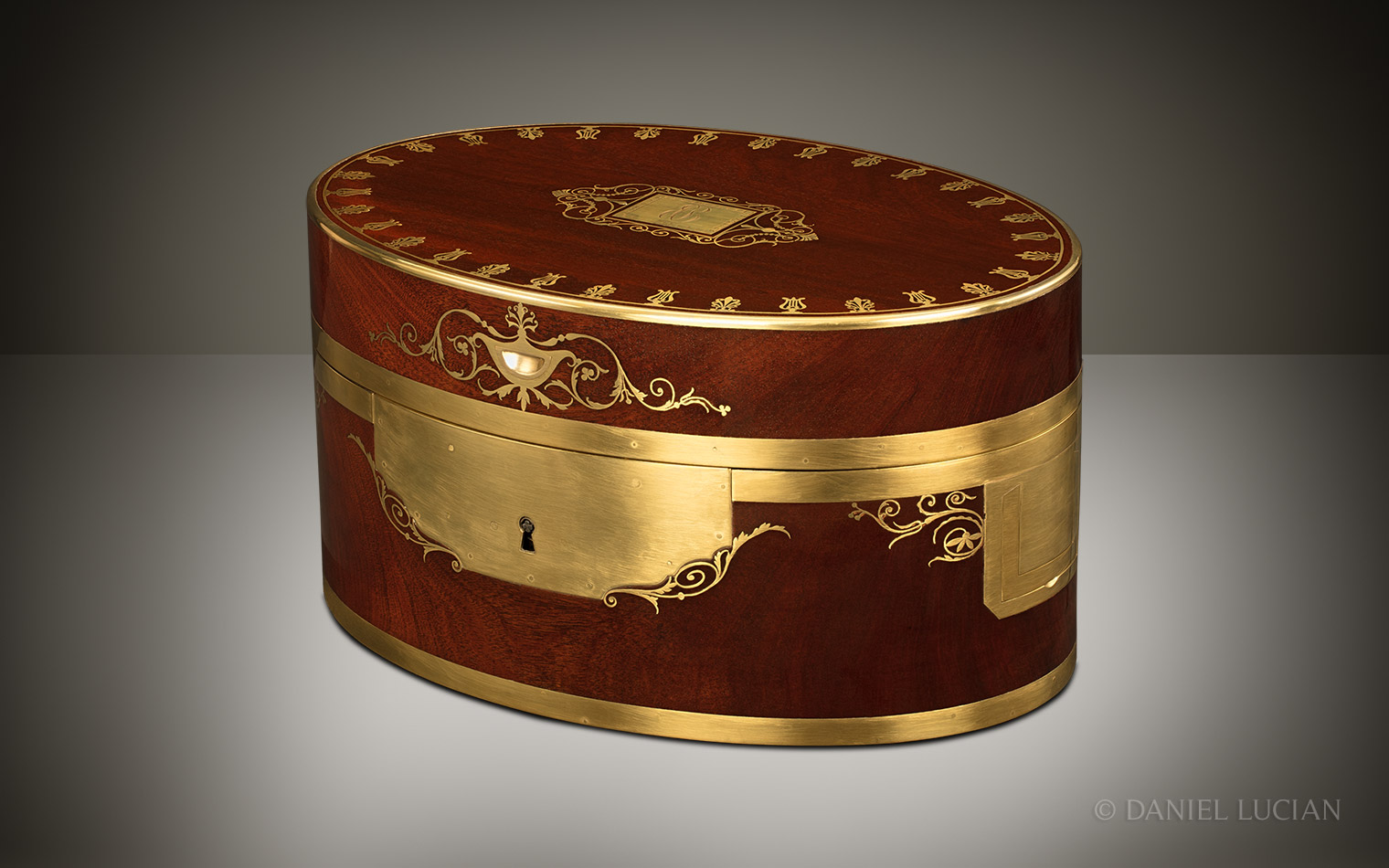
There was considerable continuity between boxes made during the late Empire and Restoration periods. Mahogany remained an important material for travelling cases, while curved, cylindrical, elliptic and compact rectangular forms established during the early nineteenth century continued into the 1820s.
Rectangular boxes were also common, with brass edging, stringing, escutcheons and decorative mounts used to enliven otherwise restrained mahogany surfaces.
The persistence of these forms is particularly important when dating French boxes. A curved or elliptic mahogany travelling case should not automatically be assigned to the First Empire simply because of its form, as closely related examples continued to be made during the Restoration period.
Charles X Period (1824 – 1830)
Charles X succeeded his brother Louis XVIII in 1824 and remained king until the July Revolution of 1830.
In French box making, the Charles X period continued many of the traditions established during the Empire and Restoration years rather than representing an abrupt change in style. Mahogany remained important for travelling cases, strongboxes and fitted boxes, often combined with brass edging, stringing, mounts or decorative inlay.
At the same time, rosewood and other richly coloured decorative timbers became increasingly prominent in coffrets and luxury boxes. Marquetry could range from restrained stringing and geometric decoration to more elaborate foliate and scrollwork designs.
Boulle marquetry also remained influential. Originally associated with André-Charles Boulle during the reign of Louis XIV, the technique combined contrasting materials such as tortoiseshell with brass, copper or pewter to create elaborate decorative patterns. Boulle and Boulle-inspired work continued to appear on nineteenth-century boxes and small cabinet work.
Surviving boxes from the Charles X period therefore range from relatively restrained mahogany travelling cases to increasingly decorative rosewood, marquetry and Boulle-inlaid coffrets. This provides a useful transition between the early nineteenth-century tradition of mahogany travelling boxes and the more elaborate box making associated with the Louis-Philippe period.

Louis-Philippe Period (1830 – 1848)
Louis-Philippe I became King of the French following the July Revolution of 1830 and reigned until his abdication during the Revolution of 1848.
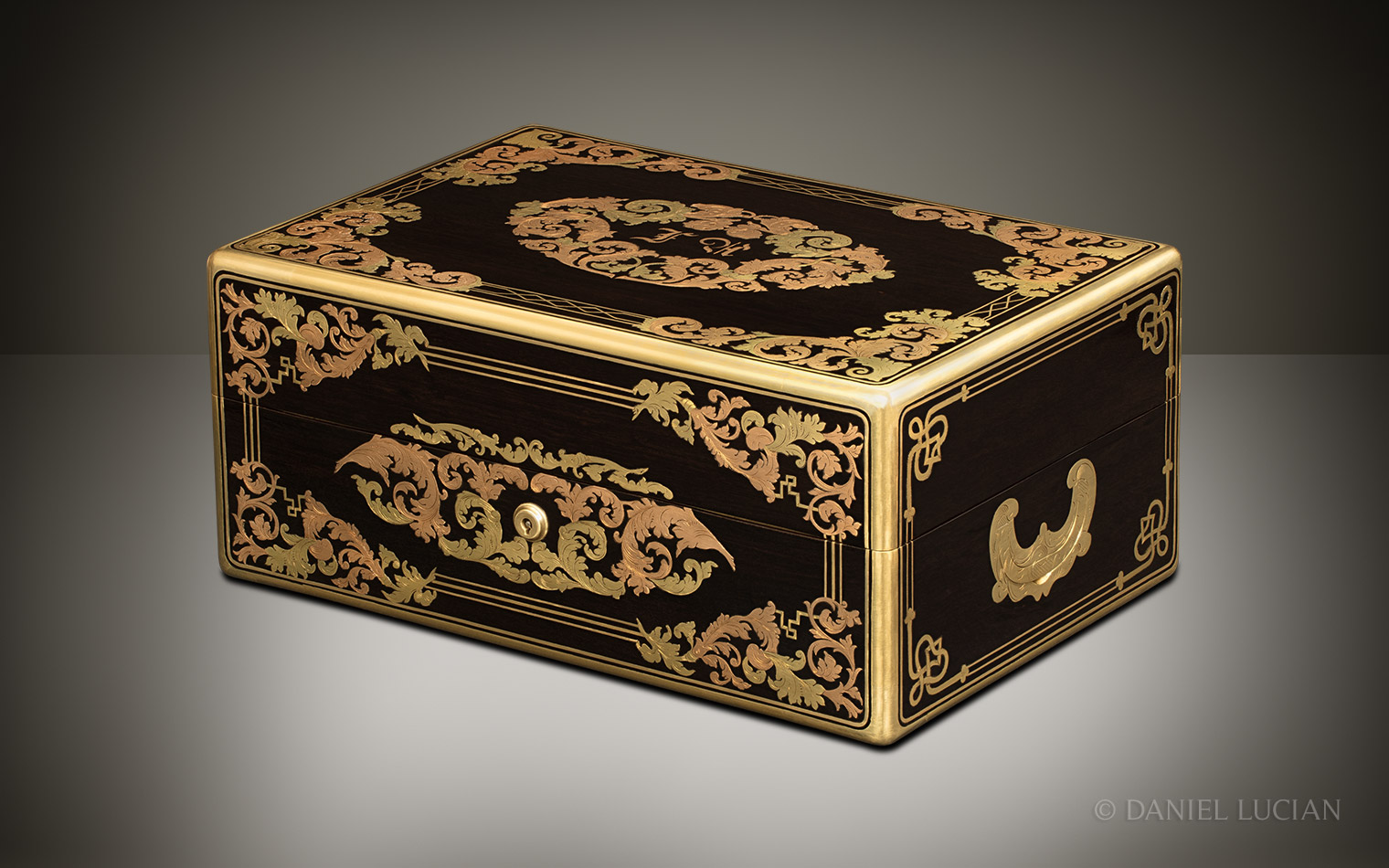
French box making during this period became increasingly varied and decorative. Darker and more richly figured woods became prominent, including mahogany, rosewood and ebony, while burr woods and other highly figured timbers were also used.
Ebony provided a particularly effective background for the increasingly elaborate brass decoration found on high-quality Parisian boxes. Engraved foliate and scrollwork brass inlay could contrast strongly against the dark surface, producing richly ornamented jewellery boxes, writing cases and nécessaires.
Luxury makers and retailers such as Alphonse Giroux supplied increasingly sophisticated objects to a wealthy French and international clientele. Their boxes could combine highly finished cabinet work with complex locks, fitted interiors, cut-glass bottles, silver or silver-gilt fittings and luxurious textiles.
The period therefore marks a noticeable development away from the relatively restrained mahogany travelling cases of the early nineteenth century towards increasingly elaborate and varied forms of decorative box making.
Second Republic (1848 – 1852)
The monarchy was abolished following the Revolution of 1848 and the Second Republic was established. Louis-Napoléon Bonaparte was elected President later that year and remained in office until 1852, when he became Emperor Napoléon III.
The Second Republic was brief and did not produce a clearly distinct style of box making. Many of the materials and decorative techniques established during the Louis-Philippe period continued to be used.
Ebony, rosewood and other richly coloured timbers, engraved brass decoration, fitted interiors and elaborate nécessaires therefore provide a direct transition between the luxury box making of the 1840s and that of the Second Empire.
Second Empire (1852 – 1870)
Louis-Napoléon Bonaparte became Emperor Napoléon III in 1852 and ruled until the collapse of the Second Empire during the Franco-Prussian War in 1870.
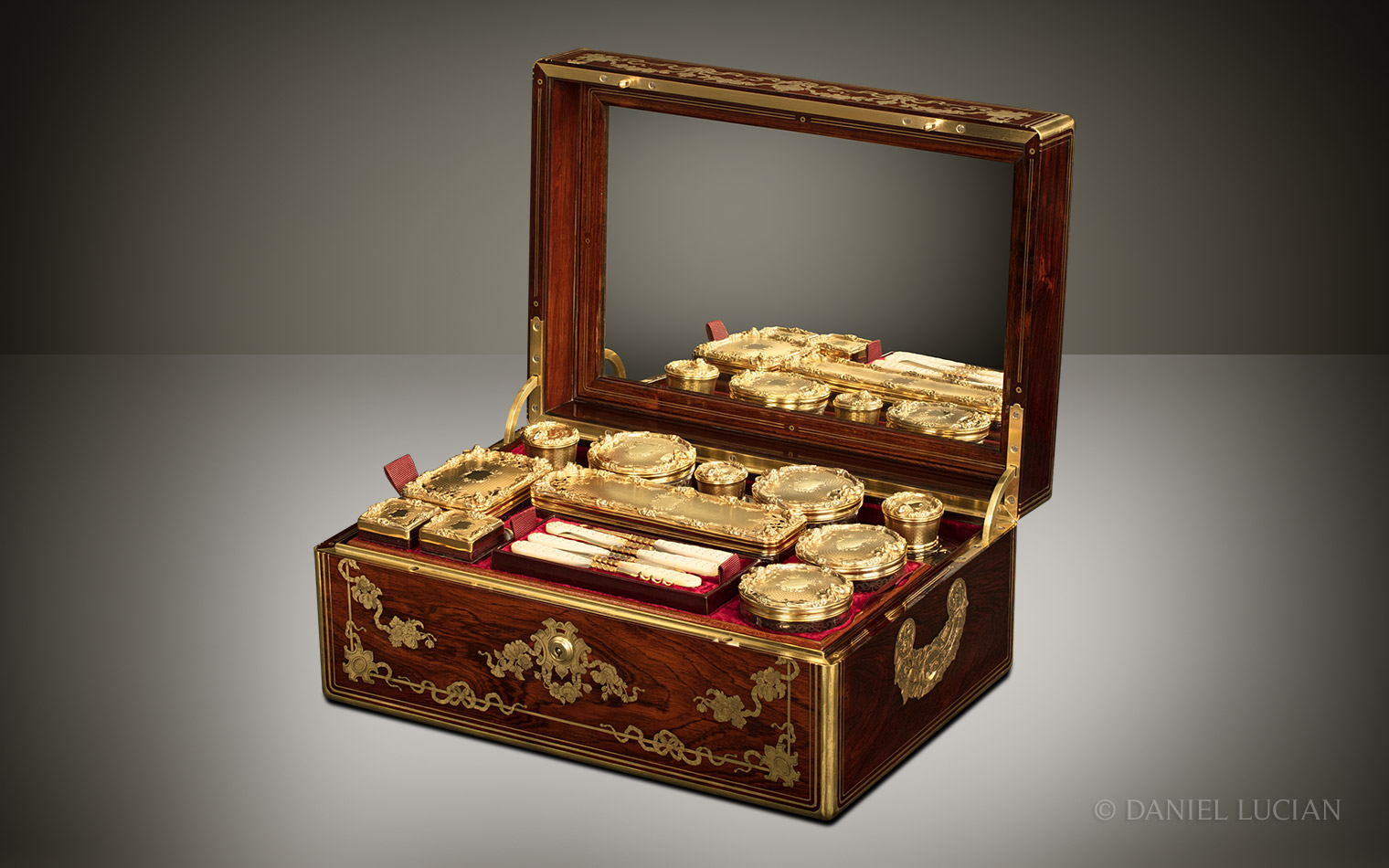
French box making during the Second Empire was characterised by considerable variety in both materials and decoration. Rosewood was particularly prominent among high-quality Parisian boxes, while ebony and other decorative timbers continued to be used. More unusual woods, including thuya and highly figured exotic timbers, also appear.
Brass decoration could be extremely elaborate, ranging from fine stringing and edging to complex engraved foliate, floral and scrollwork inlay. Yellow and bi-colour brass provided a particularly effective contrast against richly coloured woods and was widely employed on jewellery boxes, dressing cases and nécessaires.
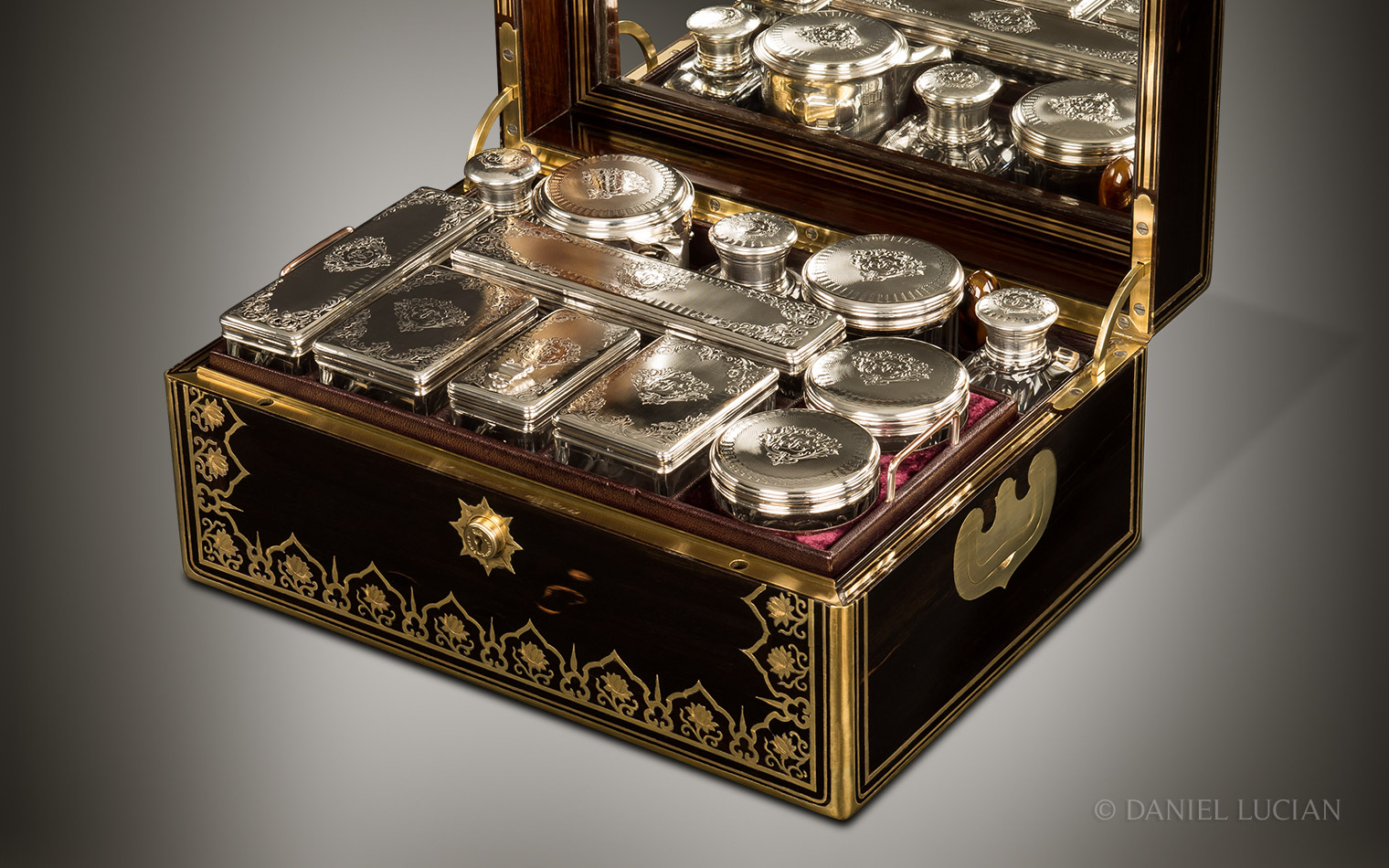
Parisian makers and retailers such as Aucoc produced exceptionally sophisticated fitted cases during this period. These could combine fine cabinet work with engraved brass decoration, silver or silver-gilt fittings, cut-glass bottles, luxurious textiles and carefully fitted trays and compartments.
Earlier French decorative techniques also continued or were revived. Boulle and Boulle-inspired marquetry remained popular for richly decorated coffrets and other luxury objects, alongside the brass-inlaid rosewood and ebony boxes characteristic of many mid-nineteenth-century Parisian makers.
Rather than being defined by a single timber or decorative style, Second Empire box making is perhaps best characterised by the richness, variety and technical sophistication of its materials, fittings and construction.
Third Republic and Belle Époque (1870 – circa 1900)
The Second Empire ended in 1870 and was replaced by the Third Republic. The later nineteenth century also formed the beginning of the period commonly known as the Belle Époque.
French box making remained highly varied during the later nineteenth century, and Paris continued to be an important centre for the production and retailing of luxury jewellery boxes, dressing cases, writing cases and travelling cases.
Established materials and techniques remained in use, including rosewood, mahogany, ebony and ebonised woods, together with marquetry, metal inlay, mother-of-pearl, leather and richly fitted interiors. Traditional forms and historical revival styles therefore continued alongside newer decorative fashions.
By the 1890s, some French boxes began to reflect the naturalistic forms, flowing lines and asymmetrical decoration associated with Art Nouveau. These newer designs did not immediately replace established forms of box making, and traditional and revival styles continued to be produced alongside them into the closing years of the nineteenth century.