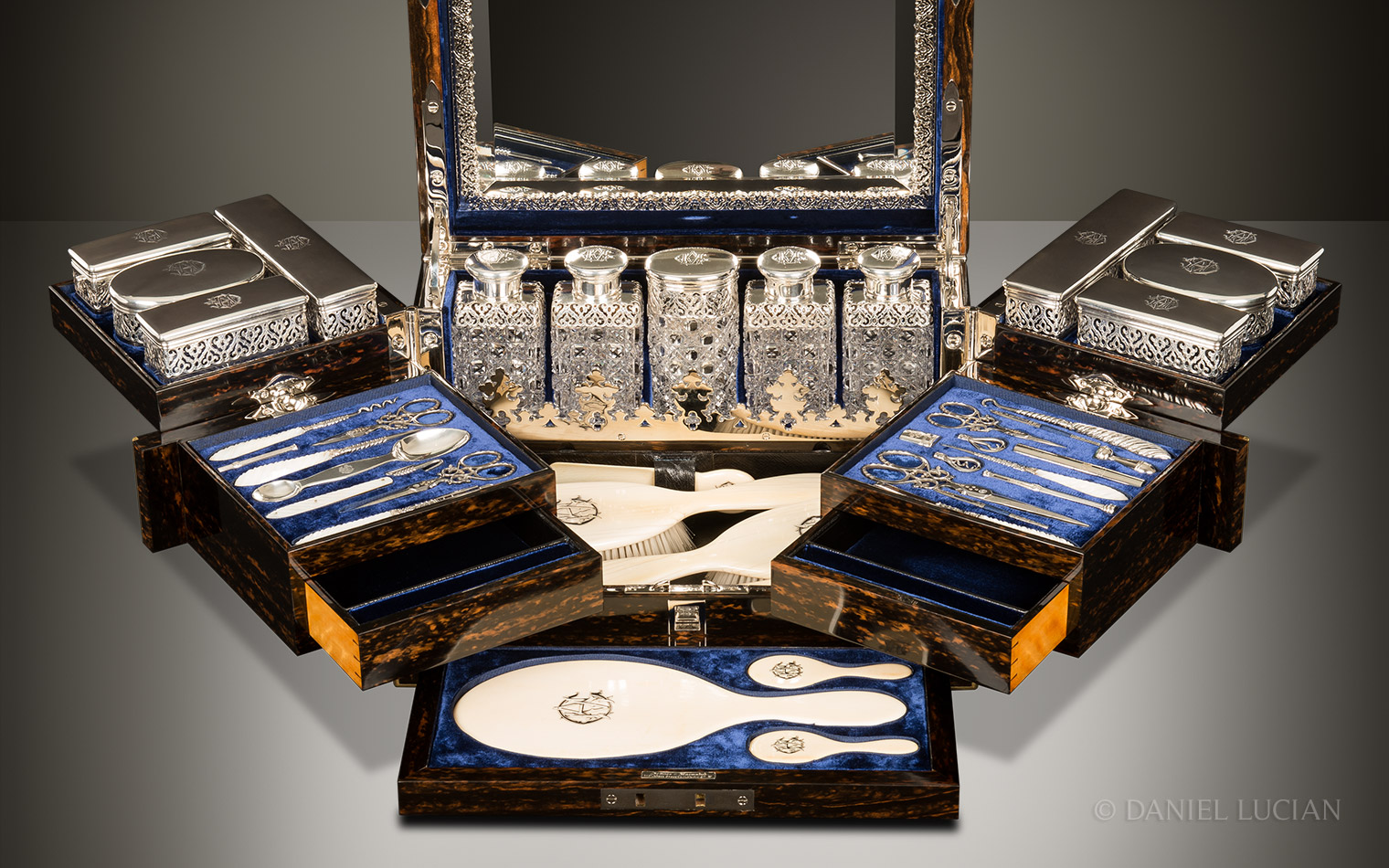
Nickel Plating (Nineteenth Century)
Nickel plating is the application of a thin layer of nickel to an object made from another metal. Although experiments in the electrodeposition of nickel began during the 1830s, the process did not become commercially established until the late 1860s, considerably later than silver electroplating.
One of the earliest recorded experiments was conducted in 1837 by George Bird, who deposited nickel onto a platinum electrode using an electrical current. In 1840, John Shore obtained an English patent for nickel plating, followed by further developments in the 1840s and 1850s. These early methods demonstrated that nickel could be deposited electrically, but difficulties in producing consistent, adherent coatings limited their commercial application.
An important breakthrough came in 1869, when the American inventor Isaac Adams Jr. patented an improved method of nickel electroplating. His process employed carefully prepared solutions of nickel and ammonium sulphates, together with suitable nickel anodes, allowing more reliable deposits of the metal. The process was introduced into Europe shortly afterwards, with nickel-plating operations established in Birmingham by 1870.
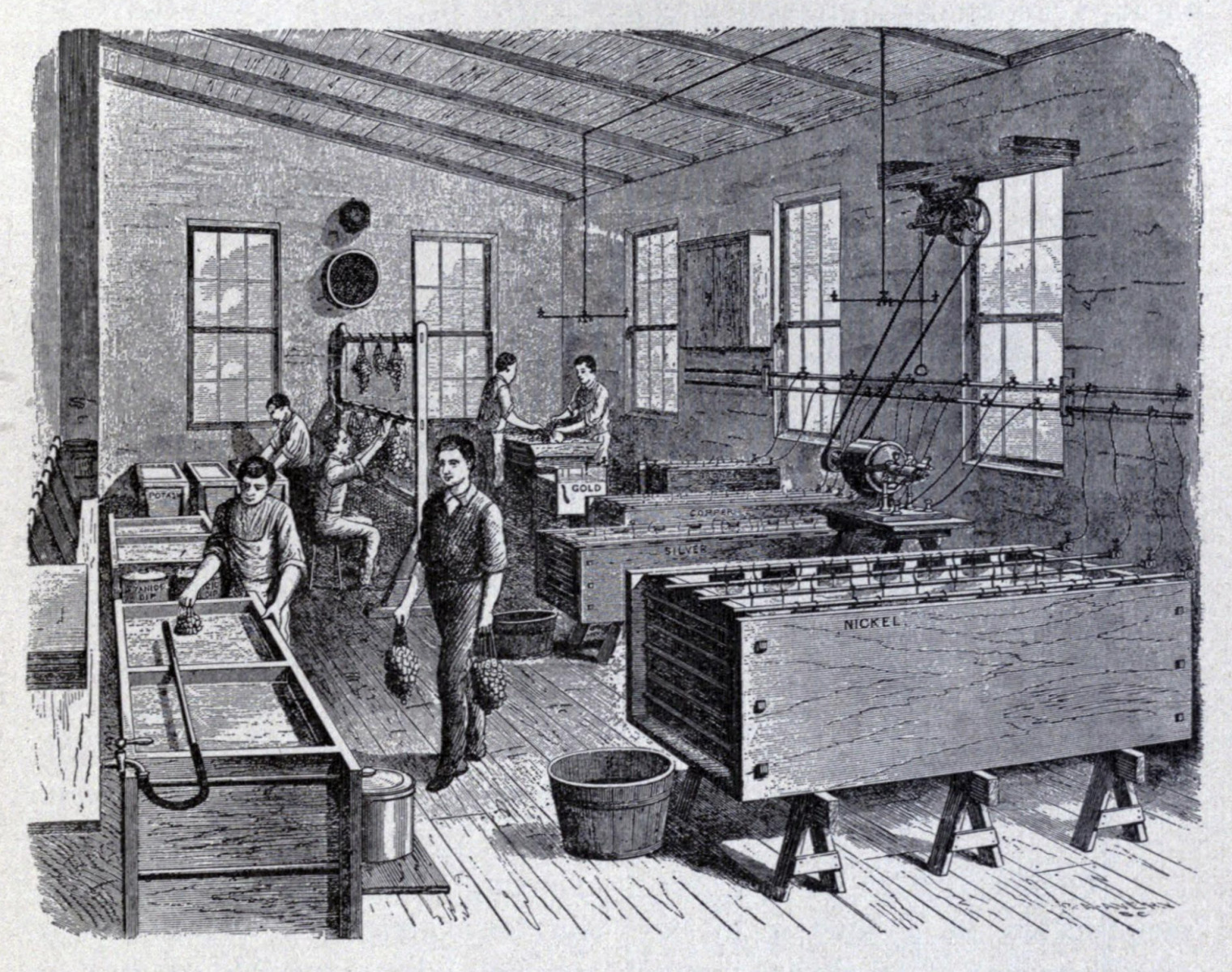
The method was similar in principle to silver electroplating. The object to be plated, commonly made from brass, copper or iron, was thoroughly cleaned and prepared before being immersed in an electrolyte containing dissolved nickel salts. It was connected as the cathode to an electrical supply, while a nickel anode was placed in the same solution.
When an electrical current passed through the bath, nickel ions were deposited onto the surface of the object, forming a thin metallic coating. Nickel from the anode replenished the solution as plating progressed. The thickness and quality of the deposit depended upon the electrical current, the composition of the solution and the condition of the metal being plated.
Nickel offered several advantages over silver. Its greater hardness provided improved resistance to wear and abrasion, while its resistance to oxidation made it less susceptible to tarnishing. When polished, nickel produced a bright, silvery finish, although its colour was generally slightly cooler and greyer than that of silver.
Nickel plating can easily be mistaken for silver plating, as both finishes have a similar silvery appearance, particularly when polished. Distinguishing between them by appearance alone can be difficult, and some nineteenth-century fittings described as silver plated may actually be nickel plated. The slightly cooler colour and greater resistance to tarnishing of nickel can provide useful indications, although neither characteristic is sufficient to identify the plating conclusively.
These properties made nickel plating particularly suitable for metal fittings subjected to frequent handling. On late-Victorian dressing cases, nickel-plated components could include hinges, lock plates, gallery rails, catches and elements of mechanical opening systems, where a durable, decorative finish was desirable.
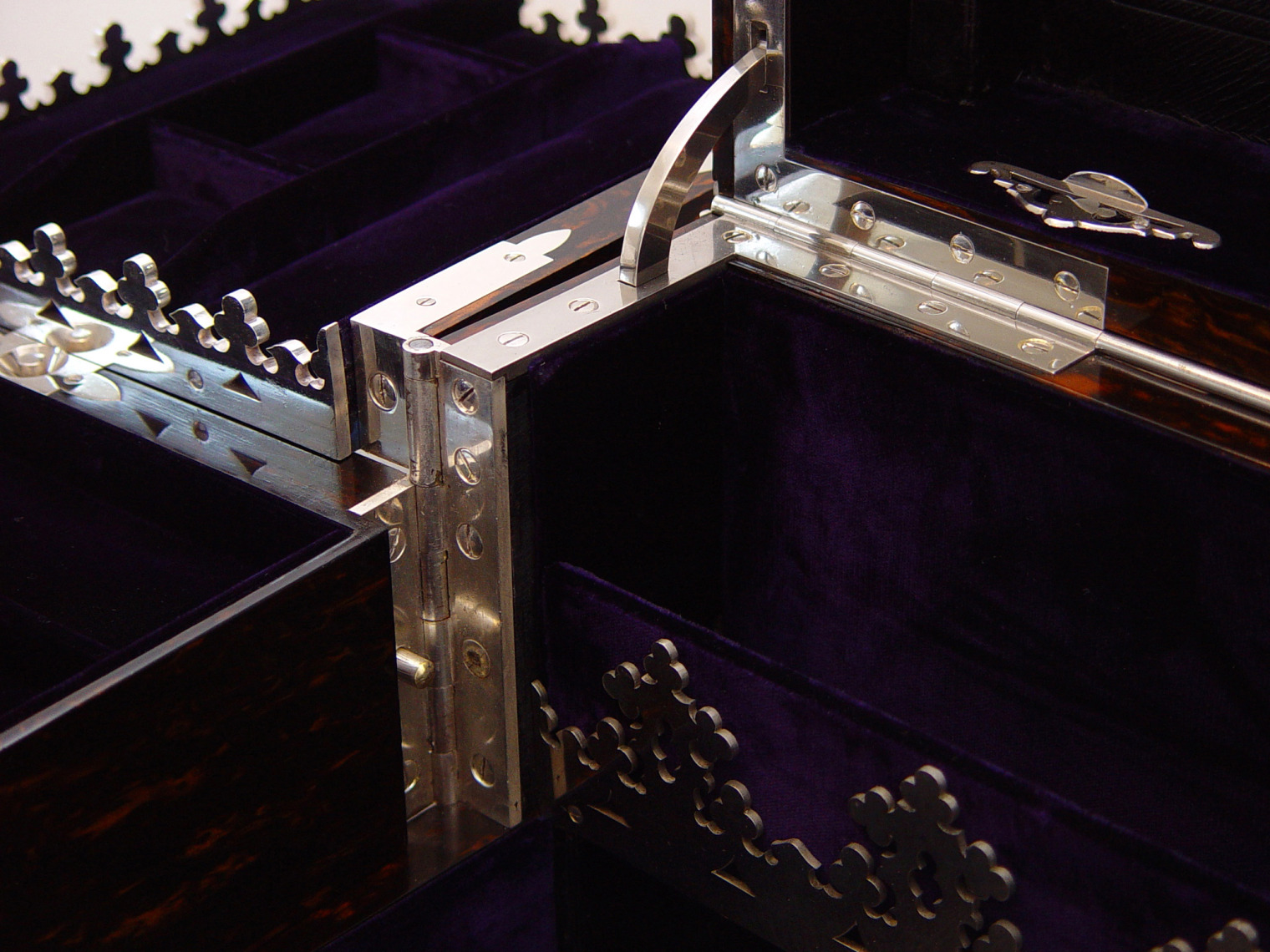
Nickel plating also provided a means of achieving a more uniform appearance throughout the interiors of fitted dressing cases. Where glass bottles and jars were mounted with solid silver or silver-plated lids, accompanying brass fittings, including hinges, lock mounts, gallery rails and other metal components, could be nickel plated to complement their silvery finish. This avoided the contrasting yellow colour of exposed brass and helped create a consistent appearance across the interior fittings.